





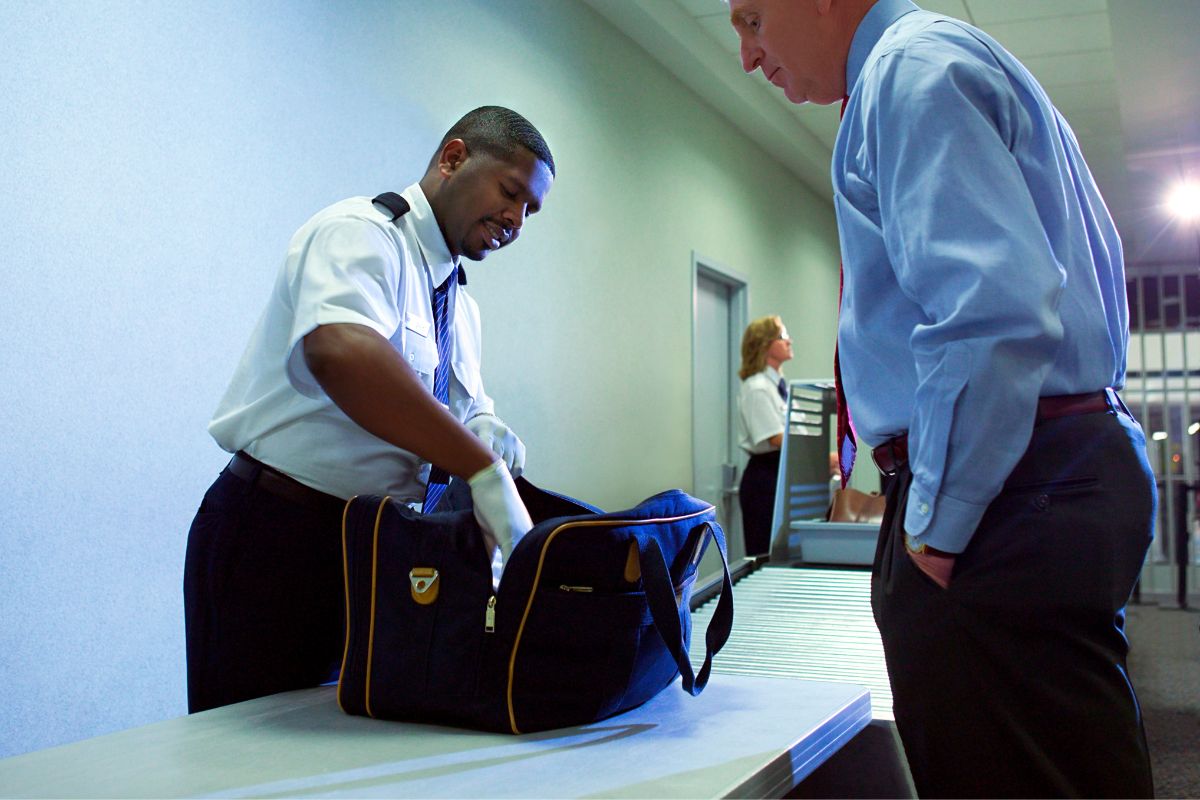







Whether you’re crossing into the U.S. or Canada, border officials may have the right to search through your electronic devices, such as cellphones, laptops and tablets.
Recent data suggests that border searches of personal digital devices have increased in frequency over the last year. Learn about the powers of border officials, the impacts on your Charter rights, and how to protect personal and confidential information when crossing the border.
What are Personal Digital Devices?
A personal digital device is any device that can store documents digitally, such as cell phones, computers, tablets, cameras, and smartwatches.
Why are Personal Digital Devices Examined at the Border?
United States
According to U.S. Customs and Border Protection (CBP), personal digital devices are examined at the United States border to determine the intentions and assess the admissibility of foreign nationals entering the United States. Furthermore, they have been used to identify and combat crimes such as terrorist activity, child pornography, human trafficking, and drug smuggling, among others.
Canada
According to the government of Canada, personal digital devices are examined at the Canadian border only if there are indicators that border laws have been contravened. Reasons that a border security officer may examine a personal digital device include concerns regarding the admissibility of foreign nationals or imported goods that may be controlled, regulated, or prohibited, and concerns regarding a traveller’s identity.
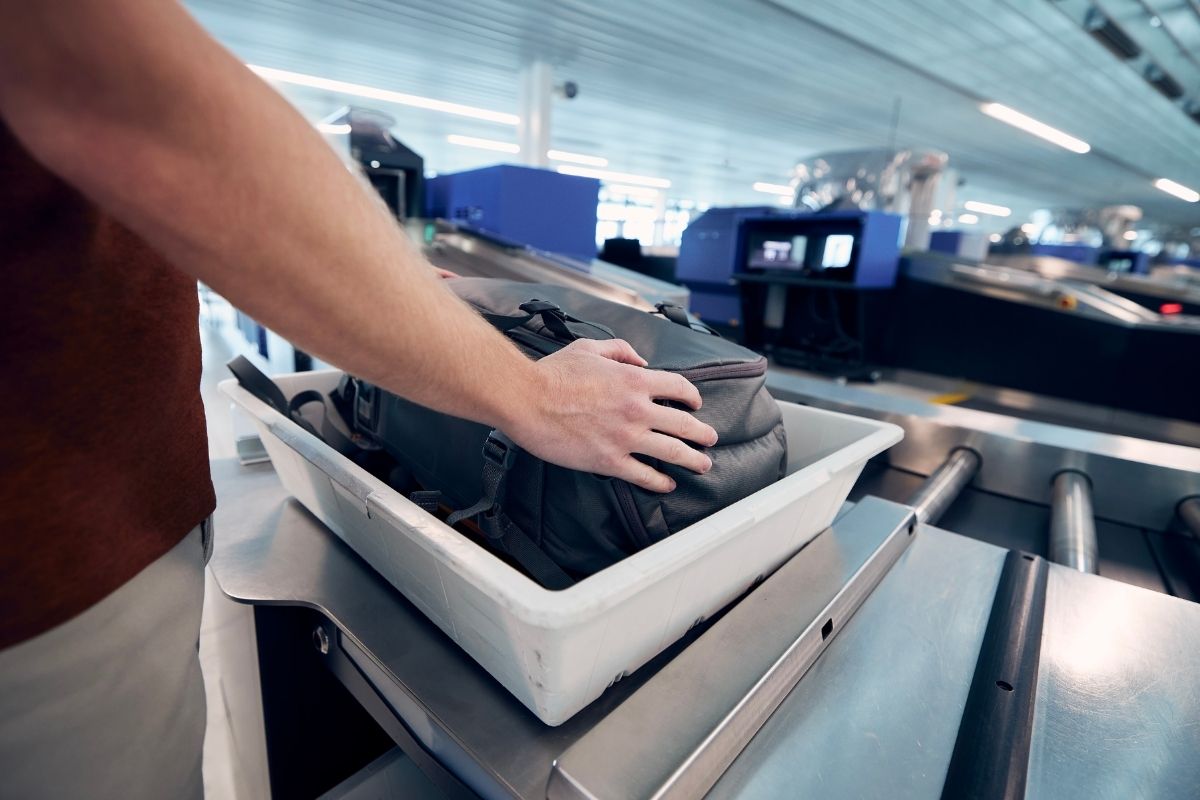
What to Expect During a Border Search
United States
There are two types of border searches at the U.S. border: ‘basic’ and ‘advanced’.
A basic search generally involves a border officer manually searching your phone without using any external equipment. This may be done with or without suspicion that a law has been violated.
Any search where an officer connects external equipment to your personal digital device to review, copy, or analyze its contents, rather than to simply gain access to the device, is considered an advanced search. An advanced search requires either a national security concern or reasonable suspicion that a CBP law has been violated, and prior approval from a senior manager. An example of a factor that may create reasonable suspicion or constitute a national security concern is the presence of an individual on a government-operated or government-vetted terrorist watch list.
Unless there are national security, law enforcement, officer safety, or other operational concerns, you should be permitted to remain present during the search of your personal digital device. However, this does not necessarily mean that you are allowed to observe the search itself. You will not be permitted to observe the search itself if doing so could reveal law enforcement techniques or compromise other operational considerations.
If your personal digital device is being searched at the border, you are obligated to present that device in a condition that allows the officer to inspect your device and its contents. If your device is password-protected, the officer may request your password and retain it as needed for the examination of your device and its contents. The password may not be used to access information that is only stored remotely, and will be destroyed when it is no longer needed. If you fail to provide the officer with your password, the officer may detain your device in accordance with s. 5.4 of CDP DIRECTIVE NO. 3340-049A.
Canada
At the Canadian border, you will be asked some questions by a border officer before your personal digital device is examined. You are obligated to provide your password if your device is password-protected. Failure to do so could result in your device being detained under s. 101 of the Customs Act, or seized under subsection 140 (1) of the Immigration and Refugee Protection Act or under section 110 of the Customs Act.
The officer should disable the network connectivity on your personal digital device so that your device cannot send or receive information. This ensures that the officer can only access documents stored on your device and cannot access documents that are solely stored remotely. Unless there are operational concerns, you should be permitted to be present while the officer examines your device.
Solicitor-Client Privileged Information
United States
If you assert that information on your personal digital device is protected by solicitor-client privilege, U.S. border officials must clarify what information is privileged and contact the CBP Associate/Assistant Chief Counsel office before examining any materials identified as privileged. The officer, the CBP Associate/Assistant Chief Counsel office, and the U.S. Attorney’s office (as needed) will coordinate to ensure that the privileged material is separated from the other information while the border search is conducted.
Any materials determined to be protected by solicitor-client privilege will only be shared with agencies that have mechanisms in place to protect the information. Any copies of privileged materials maintained by CBP will be destroyed after the search, unless the information is identified as an imminent threat to homeland security or needed to comply with a litigation hold or other legal requirement.
Canada
At the Canadian border, an officer must stop inspecting a document as soon as they become aware that the information may be subject to solicitor-client privilege. If an officer questions your assertion of solicitor-client privilege, your device may be set aside until a court can decide the legitimacy of your claim.
Contesting a Seizure
United States
If your personal digital device is seized at the U.S. border, you have several options to contest the seizure:
- You can file a petition with the CBP Fines, Penalties, and Forfeitures Office, explaining why the seizure was unwarranted.
- You can submit a formal written request for administrative review of the seizure to the CBP Fines, Penalties and Forfeitures Office. This request should be detailed and include supporting documentation, such as evidence of ownership and the lawful purpose of your device’s contents.
- If these administrative remedies are unsuccessful, you can file a lawsuit challenging the seizure in federal court.
In all cases, you should be sure to document all of your interactions with CBP and retain any receipts and other materials related to the seizure.
Canada
If your personal device is seized at the Canadian border, you have 90 days to submit a request for ministerial review. Your file will be assigned to a Recourse Directorate official, who will review your request, respond to your submission, and inform you of any additional documentation required for the review. The official will consider all of the evidence and arguments provided and decide whether the seizure was lawful, considering the relevant legislation, regulations and policies.
If this remedy is unsuccessful, you may apply to the Federal Court of Canada for further review.
Statistics on Border Searches
United States
According to U.S. Customs and Border Protection (CBP), out of over 419 million travellers processed by CBP at ports of entry into the U.S. in 2025, CBP conducted searches of 55,318 international travellers’ personal digital devices.
Out of those 55,318 searches, 50,922 (92%) were basic searches in which the devices were not connected to external equipment to review, copy and/or analyze their contents. However, the number of searches increased from 12,260 in the second quarter of the year to 14,899 in the third quarter and to 16,173 in the fourth quarter.
Canada
Available Canadian statistics show that from November 2017 to June 30, 2025, 530, 906, 949 travellers were processed at the Canadian border. Of those travellers, 37,378 had their personal digital device examined. 14,240 (38 %) of those examinations resulted in the detection of a customs or immigration-related contravention.
Tips for Travelling with Electronic Devices
Protecting Confidential Information
The best way to protect confidential information when crossing the border is to avoid bringing it with you. In cases where this may not be possible, such as travelling for work, the Federation of Law Societies of Canada has shared some tips for crossing the border with electronic devices. Although these tips are aimed towards legal professionals, many of them apply to anyone wishing to protect confidential information on their personal digital device, such as:
- Getting help from IT professionals regarding the security of your devices and alternatives to carrying potentially privileged or confidential information across the border.
- Separating your work and personal accounts on your electronic device so that privileged information in one user account can be easily identified during any prospective searches.
- Understanding that certain characteristics of your travel and your behaviour, such as travelling to and from “high risk” destinations, exhibiting nervousness or agitation, and purchasing a travel ticket at the last minute (among others), make you more likely to be examined by border agents.
- Deleting cloud-based applications before crossing the border and reinstalling them afterwards, if you use a cloud-based storage provider.
- Turning your phone to airplane mode before crossing the border so that no new information is transmitted to your phone.
- Applying for a Nexus pass. Nexus is a program run jointly by the Canadian and U.S. border control agencies, and while having this pass does not mean your devices won’t be searched, Nexus allows low-risk and pre-approved travellers to have expedited clearance at participating U.S. and Canadian border crossings.