






A criminal harassment or ‘stalking’ conviction can mean a criminal record or jail, even without any physical contact. It can also affect reputations and relationships, as charges often stem from a breakup or a family dispute.
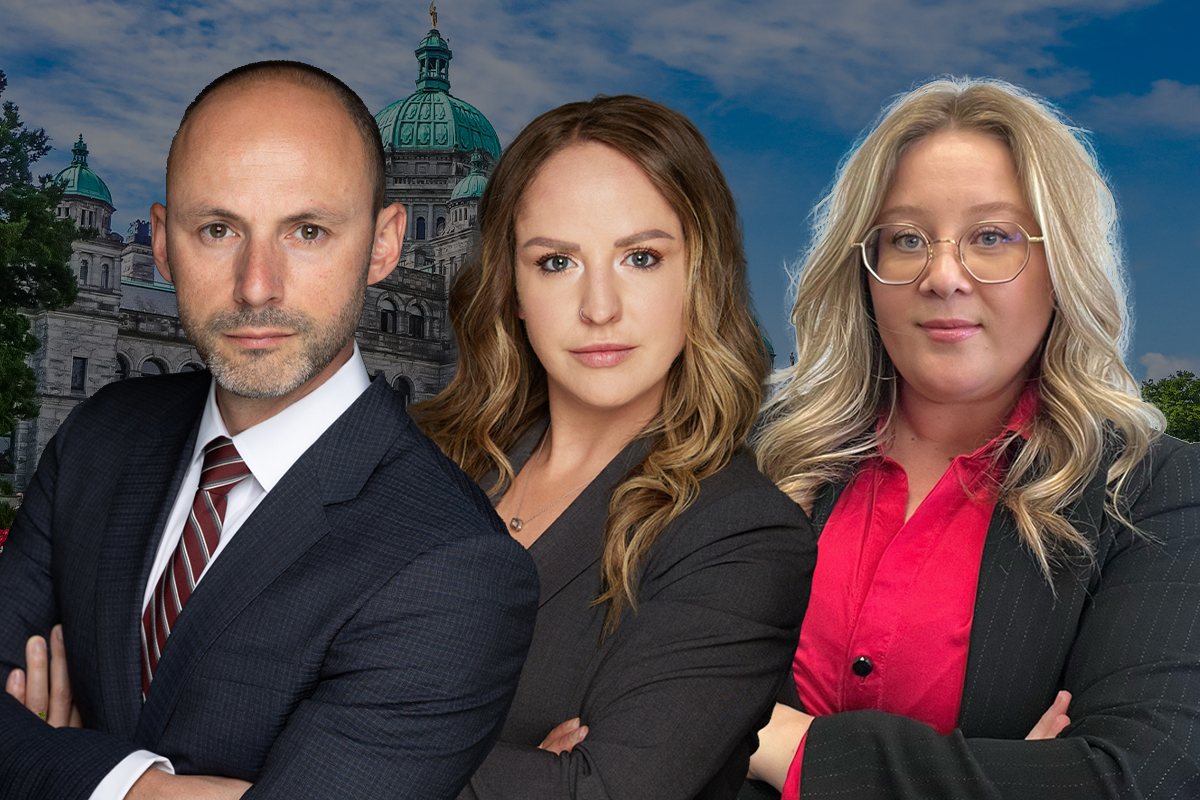
Julia Hunter and the Strategic Criminal Defence team have helped people across Greater Victoria since 2021. We work to resolve charges early, avoid a record, or win at trial.
Our efforts are supported by:
- 40+ combined years of criminal defence experience.
- 75+ five-star Google reviews from past clients.
- Involvement in hundreds of cases across the region.
We focus only on criminal defence. You get our full attention. We’re available 24/7 for urgent arrests and bail hearings.
What should you do next?
If you’re accused of criminal harassment, these steps can protect your case:
- Stop all contact with your accuser. Don’t try to explain yourself or apologize. Further contact can serve as evidence and may breach any existing release conditions.
- Save your own messages, call logs, and social media history. The full context often shows your real intent, not just the messages police saw.
- Contact us before you speak with the police or your accuser again. We can explain your rights and any conditions already in place.
Taking these steps early can prevent you from making your situation worse. If the police haven’t yet charged you, consider pre-charge legal advice to further strengthen your legal position.
Contact us for a free, no-obligation consultation.
What is criminal harassment?
Criminal harassment, under section 264 of the Criminal Code, does not require physical contact or violence. The Crown must show you knew, or should have known, that your conduct was causing fear.
The complainant’s fear must be reasonable. It can be fear for their own safety or for someone they know.
Threatening conduct that could lead to a criminal harassment charge includes:
- Repeatedly following or watching someone, or a place they live, work, or visit.
- Repeatedly contacting someone, directly or indirectly, including by phone, text, or social media.
- Threatening someone, or someone close to them.
A single incident can be enough if it is clearly threatening, though most charges involve a pattern of repeated conduct.
Criminal harassment is a hybrid offence with no mandatory minimum penalty.
The Crown can treat it as:
- A more serious (indictable) offence: up to 10 years of imprisonment.
- A less serious (summary) offence: up to 2 years less a day in jail, and a $5,000 fine.
What could a criminal harassment charge cost you long-term?
A criminal harassment charge carries risks beyond jail time. If the accusations involve a spouse, partner, or family member, that relationship is a factor at sentencing. Under the Criminal Code, it can lead to a harsher penalty.
A no-contact condition, from bail or a peace bond, can bar you from your own home or from seeing your children, even before any trial.
A conviction can have a long-term effect on:
- Custody arrangements.
- Immigration status.
- Professional licences that require a clean record.
- Job applications.
- Ease of travel, including to the U.S.
Is a protection order the same as a criminal charge?
Not always. Many criminal harassment cases run alongside a separate civil protection order. A person may seek a protection order under BC’s Family Law Act through the family court. This does not usually involve the police and does not result in a criminal record on its own.
If, however, you breach a protection order or a peace bond from criminal court, that’s a crime. We can advise you on both a criminal harassment charge and any protection order tied to it.
How can Strategic Criminal Defence help?
If someone makes a criminal harassment complaint about you, the local police will likely take up the case. This could be the Victoria Police Department, Saanich Police, Oak Bay Police, or an RCMP detachment.
The earlier you call us, the sooner we can start protecting your rights and building your defence.
The police may release you with a Promise to Appear and a court date after charging you. If you need a bail hearing, they may take you to the Vancouver Island Regional Correctional Centre on Wilkinson Road.
We can represent you at the hearing. Your lawyer can try to negotiate release conditions that let you keep your job and see your children, where possible.
However, bail for criminal harassment almost always comes with strict conditions, such as:
- No contact with the complainant.
- Staying away from the complainant’s home and/or workplace.
- Regular reporting to a bail supervisor.
- A possible curfew.
Breaching any of these conditions is a new criminal charge on its own.
How can we help resolve your criminal harassment case?
After you’re released, your lawyer can:
- Review the full communication history and any surveillance evidence against you.
- Work to reduce your charge, resolve it without a criminal record, or take your case to trial.
The Victoria Law Courts, at 850 Burdett Avenue, hear criminal harassment cases. However, there is a good chance that your case doesn’t proceed to trial, since most criminal cases in Canada resolve before that point.
We can often pursue plea bargaining or pre-trial resolutions for criminal harassment cases, such as:
- A peace bond. You agree to conditions like no contact for up to a year, and the Crown withdraws the charge without a conviction.
- Diversion. A first-time or lower-risk case is resolved outside court, often through counselling, with no conviction on your record.
- A reduced charge. The Crown agrees to a lesser offence in exchange for a guilty plea, avoiding a criminal harassment conviction.
Victoria lawyer Julia Hunter worked inside the Crown Prosecution Service and in Judges’ Chambers before moving to defence work. That experience shapes how she looks for weak points in the Crown’s case to build your defence.
Testimonials
Here’s what clients have said about us. Remember that past results do not guarantee future outcomes.
Y.S.
C.H.
K.C-R.
What defences could we use in your case?
Every harassment case depends on its own facts. Here are some options:
| DEFENCE | HOW IT APPLIES |
|---|---|
| No reasonable fear | The other person's fear was not reasonable, given the full circumstances of the case. |
| Lawful authority | The contact was legally permitted, such as serving legal documents or lawful debt collection. |
| No knowledge or recklessness | You did not know, and had no reason to know, that your conduct was unwanted. |
| Mistaken identity or account compromise | Someone else sent the messages or made the contact, such as through a shared device or a hacked account. |
| Charter violations | Police carried out an unlawful search, an improper arrest, or delayed your right to a lawyer. |
To identify the best defence, we review all evidence. This includes the full pattern of communication, not just the messages police relied on.
Frequently asked questions
Contact us for a free, no-obligation consultation.

Verified By: Julia Hunter, Criminal Defence Lawyer
Julia Hunter is a senior criminal defence lawyer at Strategic Criminal Defence in Victoria, BC. She has appeared at every level of court in British Columbia and has defended clients on assault, impaired driving, theft, break and enter, and sexual offence charges. Before moving to defence work, she trained with the Alberta Crown Prosecution Service and the Specialized Prosecutions Branch, giving her direct insight into how the Crown builds its case. Julia holds a Law Degree with Honours from Queen’s University Belfast.