





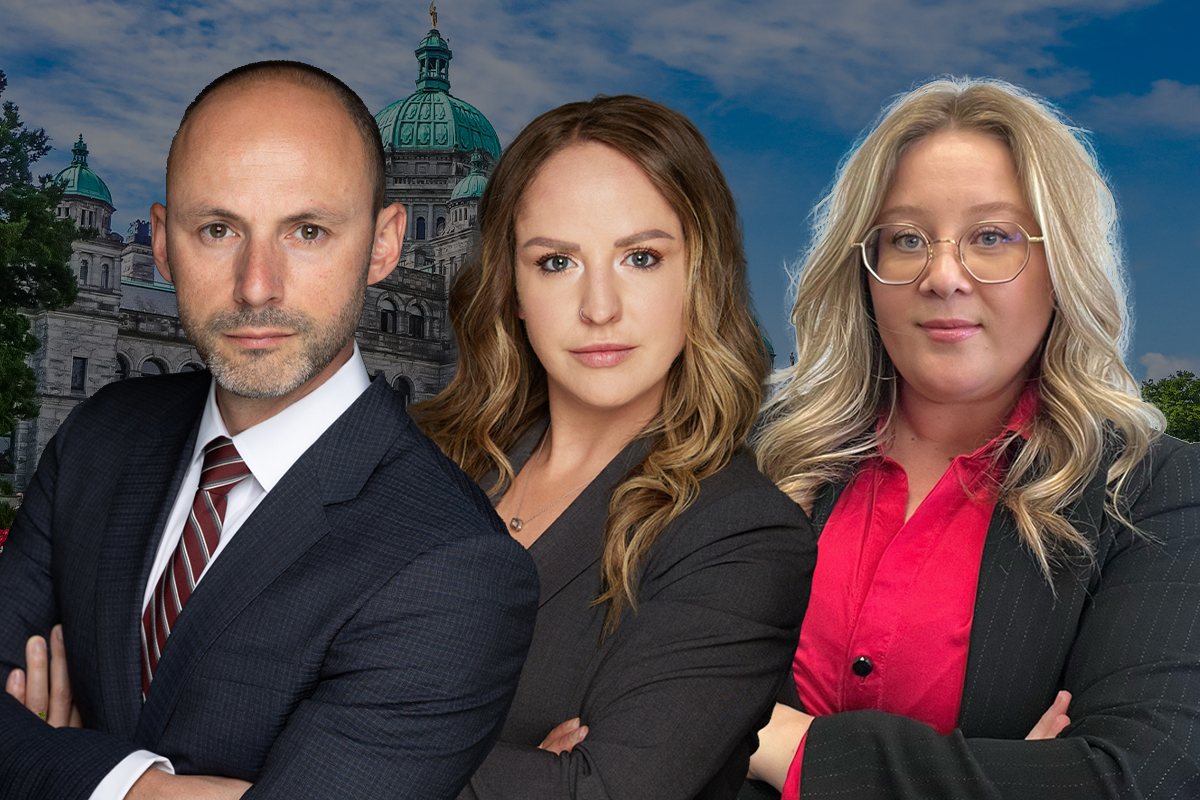
If you or someone you love has been accused of impaired driving in Victoria, you probably have one question: what happens now?
Our Victoria team has defended drivers across Vancouver Island since 2021. There is a big difference between a charge and a conviction.
Let us protect you:
- 40+ combined years of criminal defence experience.
- Winner of the Consumer Choice Award for Best Criminal Defence Firm in Victoria.
- 75+ five-star Google reviews from clients across Vancouver Island.
- Featured on CBC News, CTV News, and Yahoo News.
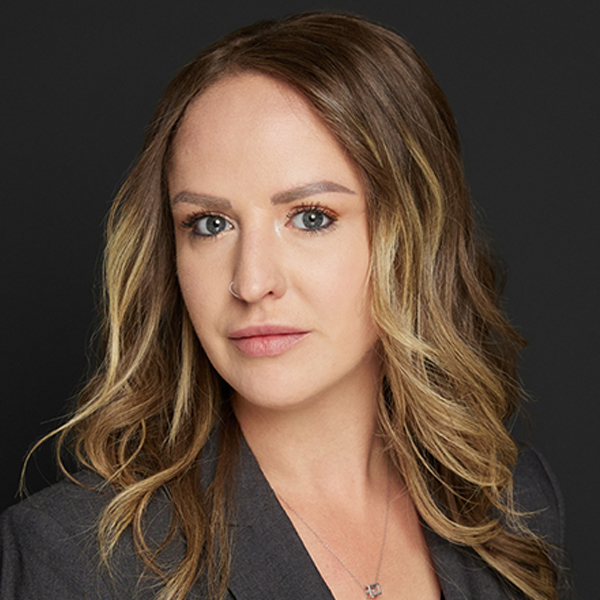
Julia Hunter and our Victoria team are available 24/7 for urgent arrests and bail hearings.
Contact us for a free, no-obligation consultation.
Charged with impaired driving? Here’s what to do next
If you’re charged with impaired driving in Victoria, take these three steps right away:
- Stop talking to the police. Politely decline to answer further questions until you have spoken with a lawyer. What you say to the police will be used against you.
- Write down everything you remember. Note the time of the stop, what the officer said, and how any tests were conducted, while the details are still fresh.
- Call a lawyer before your first court date. Licence suspension deadlines move fast. Early legal advice protects options that disappear if you wait.
Taking these steps gives your lawyer the best chance to challenge the case against you.
Julia Hunter, Criminal Defence Lawyer
What is impaired driving and over 80?
Canada doesn’t use the term DUI. Instead, section 320.14 of the Criminal Code outlines charges of impaired driving and ‘over 80’.
The police can charge you if:
- Your ability to operate a vehicle, boat, or aircraft is affected by alcohol or drugs.
- Your blood alcohol concentration reaches 80 mg of alcohol in 100 mL of blood within two hours of driving.
You don’t need to be caught driving to be charged with impaired driving or over 80. If the police believe you had care and control of the vehicle, meaning you could easily have set it in motion, you can still face charges.
The penalties are harsh. Calling us early in your case allows us to work quickly to limit the consequences.
What happens if you’re accused of impaired driving in Victoria?
Reducing road accidents is a priority for the Victoria, Oak Bay, and Saanich Police Services. That means drink-driving is treated seriously.
British Columbia has operated a two-track system for impaired driving since 2010:
- An administrative Immediate Roadside Prohibition (under BC’s Motor Vehicle Act). This can suspend your licence and impound your vehicle within minutes.
- A separate criminal charge under the Criminal Code, which can lead to a fine, jail time, and a criminal record.
Both tracks result in license suspension, but only the second-track charges lead to a criminal record.
What is an Immediate Roadside Prohibition (IRP) in BC?
An Immediate Roadside Prohibition is a licence suspension that BC police can issue right at the roadside. This is based only on your breath sample.
The suspension applies immediately, even if you are never criminally charged. It runs separately from any Criminal Code case. As a result, the IRP is usually the fastest and most common consequence of an impaired driving stop in Victoria.
If you blow in the warning range (a blood alcohol concentration of 0.05 to 0.08), your penalty increases with each warning in a five-year period:
| IRP LEVEL | LICENCE SUSPENSION | VEHICLE IMPOUNDMENT | FINE |
|---|---|---|---|
| Warning, 1st in 5 years | 3 days | 3 days | $200 |
| Warning, 2nd in 5 years | 7 days | 7 days | $300 |
| Warning, 3rd+ in 5 years | 30 days | 30 days | $400 |
| Fail (over 0.08 or refusal) | 90 days | 30 days | $500 |
If you blow over 0.08, or refuse to provide a breath sample, you will typically face:
- A 90-day Immediate Roadside Prohibition.
- A possible referral to the Responsible Driver Program.
- A possible referral to the Ignition Interlock Program before your licence is reinstated.
You need to appeal your IRP within 7 days. Our lawyers can help you do that.
What are the criminal penalties for impaired driving in Victoria?
The police can still charge you with impaired driving if you are within the warning range, blow over 0.08, or refuse a lawful breath test.
If police proceed with a criminal charge, whether instead of or alongside an IRP, the Criminal Code sets out the penalties.
| CRIMINAL OFFENCE | MINIMUM PENALTY | MAXIMUM PENALTY |
|---|---|---|
| First offence | $1,000 fine, plus a criminal record. | 2 years less a day (summary) or 10 years (indictment). |
| Second offence | 30 days in jail. | 2 years less a day (summary) or 10 years (indictment). |
| Third offence | 120 days in jail. | 2 years less a day (summary) or 10 years (indictment). |
| Causing bodily harm | Same mandatory minimums as above apply. | 2 years less a day (summary) or 14 years (indictment). |
| Causing death | Same mandatory minimums as above apply. | Life in prison. The Crown must proceed by indictment. |
How can a Victoria impaired driving lawyer help?
Exactly how we help depends on whether you are facing an Immediate Roadside Prohibition alone or a criminal charge as well.
Challenging IRP sanctions
With an IRP, our team can help you challenge your prohibition within the 7-day deadline.
The appeal must be on one of the following grounds:
- You were not the driver.
- The breath testing process was not followed correctly.
- The device or the result was unreliable.
- Your prohibition should be shorter.
Defending you in a criminal impaired driving case
In criminal cases, there may still be room to change how your case unfolds if you contact us before your first court date.
Being held after a charge is uncommon in a standard first-time case. If it happens to you, we can represent you at a bail hearing at the Victoria Courthouse.
Typical release conditions include:
- A driving ban.
- Reporting requirements.
- Abstaining from alcohol or drugs.
Depending on circumstances, we then consider ways to minimize the consequences for you:
- Examine the full Crown disclosure. We compare the video, the officer’s notes, and the breath certificate to identify gaps that raise doubts.
- Check whether your Charter rights were respected. This includes your right to know why you were detained, your right to speak with a lawyer before a formal test at the station, and whether police had lawful grounds to stop you in the first place.
- Look at treatment-based sentencing options. Under section 320.23(2) of the Criminal Code, a court does not have to impose the mandatory minimum penalty if you complete an approved treatment program. That can be a meaningful path for some clients.
- Negotiate toward a non-criminal resolution. Where the evidence supports it, this can mean a plea to a Motor Vehicle Act offence rather than a Criminal Code conviction.
Another option is to proceed to a full trial. Most impaired driving cases in Canada don’t go to trial. If your case goes the distance, however, we can represent you at the Victoria Courthouse on Burdett Avenue.
We will work to prevent a criminal record. If necessary, we can also help you plan around any licence, interlock, or program requirements that come with the outcome.
What typical defences do we pursue at trial?
Every case is different, but common defences to impaired driving charges include:
- Charter breaches. If police did not follow proper procedure during your stop, arrest, or breath testing, the evidence against you may be excluded.
- Faulty breathalyzer results. Equipment errors or improper testing procedures can undermine the Crown’s case.
- Involuntary intoxication. If you didn’t knowingly consume the substance that impaired you, this can challenge a key element of the charge.
- No care and control. If you were not in a position to operate the vehicle, the charge may not hold up.
We review the full police file, including video footage and breath test records. That way, we can identify the defence that gives you the strongest chance of success.
Testimonials
Here’s what clients have said about us. Remember that past results do not guarantee future outcomes.
D.N-Z.
D.C.
M.C.
Frequently asked questions
Contact us for a free, no-obligation consultation.

Verified By: Julia Hunter, Criminal Defence Lawyer
Julia Hunter is a senior criminal defence lawyer at Strategic Criminal Defence in Victoria, BC. She has appeared at every level of court in British Columbia and has defended clients on assault, impaired driving, theft, break and enter, and sexual offence charges. Before moving to defence work, she trained with the Alberta Crown Prosecution Service and the Specialized Prosecutions Branch, giving her direct insight into how the Crown builds its case. Julia holds a Law Degree with Honours from Queen’s University Belfast.