





Many sexual assault charges result from a single disputed moment, a misread signal, or a relationship that ended badly. Not all cases are as clear-cut as they first seem. The potential consequences, however, are always serious.
Since 2021, Strategic Criminal Defence has helped hundreds of people across Greater Victoria defend criminal charges.
We work with sensitivity, discretion, and dedication for the best possible outcome:
- 40+ combined years of criminal defence experience.
- 24/7 availability for urgent arrests and bail hearings.
- A track record that includes 75+ five-star Google reviews from past clients.
- Winner of the Consumer Choice Award for Best Criminal Defence Firm in Victoria.
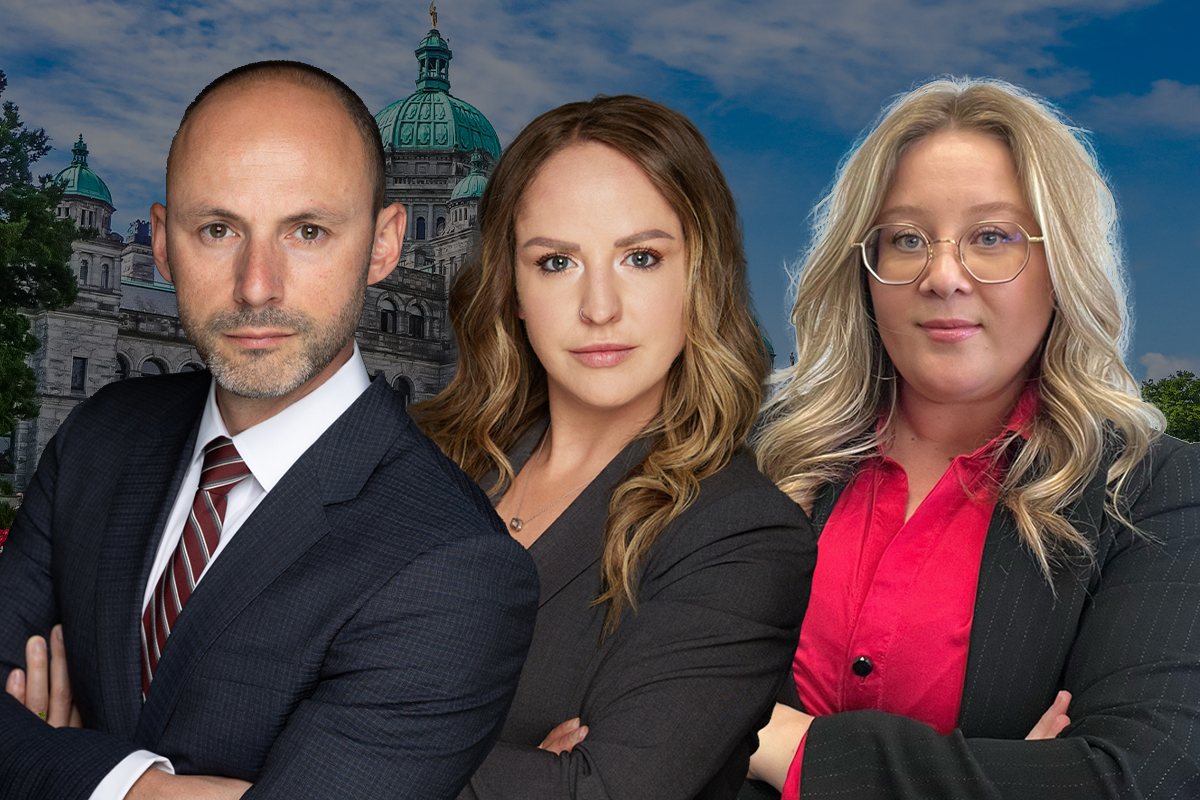
Our team, led by Julia Hunter, focuses only on criminal defence. You get our full attention.
Accused of sexual assault? What next?
Your first moves after learning about an allegation can shape the rest of your case:
- Remain silent until you speak with a lawyer. Anything you say to the police, including an attempt to explain your side, can become evidence against you.
- Don’t contact the complainant to apologize. Any contact after an allegation may be treated as evidence of guilt or used to support a no-contact condition.
- Write down your own timeline while your memory is fresh. Dates, locations, messages, and witnesses can all support your defence later.
- Call a sexual assault lawyer. Your first call, as soon as you’re aware of sexual assault allegations, should be to a capable criminal defence lawyer.
Pre-charge legal advice can help in sexual assault cases. It’s often a case of one person’s word against another’s. A Strategic Criminal Defence lawyer can help prevent you from making your situation worse.
Contact us for a free, no-obligation consultation.
What is sexual assault, and what penalties apply?
Sexual assault is any non-consensual touching of a sexual nature. That covers everything from an unwanted hug, kiss, or grope to much more serious conduct, like intercourse.
It is a hybrid offence. This means the Crown chooses whether to prosecute it summarily (less seriously) or by indictment (more seriously).
There are three basic levels of sexual assault under Canadian law:
| LEVEL | WHAT IT MEANS | MAXIMUM PENALTY | MINIMUM PENALTY |
|---|---|---|---|
| Sexual assault s.271 | Non-consensual touching of a sexual nature. | 10 years (indictable), or 14 years if the complainant is under 16. 18 months (summary), or 2 years less a day if the complainant is under 16. |
None, unless the complainant is under 16: 1 year (indictable) or 6 months (summary). |
| Sexual assault with a weapon, threats, or bodily harm s.272 | Sexual assault involving a weapon, a threat to a third party, injury, or more than one person. | 14 years (indictable only). Life imprisonment if the complainant is under 16. |
None in the base case. 4-7 years in some circumstances. |
| Aggravated sexual assault s.273 | Sexual assault that wounds, maims, disfigures, or endangers someone's life. | Life imprisonment (indictable only). | None in the base case. 4-7 years in some circumstances. |
In July 2026, a one-year mandatory minimum jail sentence for sexual assault cases with complainants under 16 was restored. There are other mandatory minimums for offences involving a firearm, gang-related crimes, or repeat offenders.
We will examine the evidence, work for your release from custody if necessary, and start building your defence.
How could a sexual assault conviction impact you long-term?
The effects of a conviction don’t stop once you complete a jail or probation sentence.
You may also face:
- Registration on the National Sex Offender Registry. This depends on the specific circumstances, though registration is still common for sexual assault convictions.
- Employment issues. The permanent criminal record shows up on background checks for jobs and volunteer work.
- Travel problems. You may be inadmissible to the U.S. and other countries.
- Immigration consequences. Non-Canadian citizens may face removal under the Immigration and Refugee Protection Act.
- Restrictions on using the Internet or attending places where children are present if the complainant was under 16 (Section 161).
- A DNA order under Section 487.051 of the Criminal Code.
Consequences like these, which can affect your career, your family, and where you can live, make a strong defence critical.
How will we defend you?
If the police investigate you for sexual assault, they may arrest and hold you at the Victoria Police Department at 850 Caledonia Avenue.
The officers must decide whether to release you with conditions or hold you for a bail hearing. If they hold you, they may transfer you to the Vancouver Island Regional Correctional Centre in Saanich.
What happens at your bail hearing and first court appearance?
We can represent you at the hearing and will argue for release under the least restrictive bail conditions possible.
However, upon release, you will likely need to:
- Regularly report to a bail supervisor.
- Avoid all contact with the complainant, witnesses, or their families.
- Surrender your passport or accept travel restrictions.
- Agree not to consume alcohol and non-prescribed drugs.
- Stay at a specific address, sometimes with a surety who agrees to supervise you.
A judge at the Victoria Law Courts on Burdett Avenue will likely hear your case. We can request the Crown’s disclosure at your first appearance.
This contains the evidence against you, including:
- Witness statements.
- Communications.
- Forensic evidence.
- Any recorded evidence.
We can scrutinize this and start building your defence.
Can we prevent a criminal record?
Your case can sometimes be resolved through negotiation with the Crown. Otherwise, it proceeds to trial in the Provincial Court of British Columbia. If you’re convicted of sexual assault, you will have a criminal record.
However, our lawyers will work to prevent a conviction by:
- Identifying weak evidence or Charter rights violations, which can lead to withdrawal of the charges.
- Fighting for an acquittal at trial.
Aggravated sexual assault does not qualify for diversion programs or a peace bond in Victoria. For the other levels of sexual assault, a diversion program may be possible, but only with senior Crown approval. A discharge may also be available in less serious cases without a mandatory minimum sentence.
It’s essential to build the strongest defence from the start. Julia Hunter previously worked inside the Crown Prosecution Service. That has given her insight into how the Crown builds sexual assault cases and how best to challenge them.
What defences apply to a sexual assault charge?
With sexual assault charges, it can often feel like the court of public opinion has already found you guilty. In the BC courts, that’s not the case.
The Crown must prove every element of the offence beyond a reasonable doubt. This includes that the contact happened, it was sexual in nature, and you knew the complainant was not consenting.
Most of the time, we use one of the following defences:
- Consent. The complainant agreed to the contact freely and without pressure. Consent must be given in the moment and cannot be assumed from silence or a past relationship.
- Honest but mistaken belief in consent. You genuinely believed the complainant was consenting, based on clear words or actions, not assumptions.
- Identity. In cases involving strangers, parties, or poor lighting or memory, evidence may support a claim of mistaken identity.
- Charter violations. Evidence is thrown out because the police failed to follow proper procedure during your arrest, questioning, or search.
We will decide on the best defence for your case once we know the facts.
Testimonials
Here’s what clients have said about us. Remember that past results do not guarantee future outcomes.
S.B.
B.
L.M.
Frequently asked questions
Contact us for a free, no-obligation consultation.
Verified By: Julia Hunter, Criminal Defence Lawyer
Julia Hunter is a senior criminal defence lawyer at Strategic Criminal Defence in Victoria, BC. She has appeared at every level of court in British Columbia and has defended clients on assault, impaired driving, theft, break and enter, and sexual offence charges. Before moving to defence work, she trained with the Alberta Crown Prosecution Service and the Specialized Prosecutions Branch, giving her direct insight into how the Crown builds its case. Julia holds a Law Degree with Honours from Queen’s University Belfast.