












Whether your case involves the intentional or reckless risk to human life, damage to property, insurance fraud, or negligence under Sections 433 to 436 of the Criminal Code, your lawyer will:
- Scrutinise the evidence.
- Work with fire experts.
- Protect your rights from the start of the investigation to case resolution.
With over 700 Google reviews, more than 10,000 cases defended, and recognition for eight consecutive years by Three Best Rated®, we are accustomed to building robust defences in high-stakes cases.
We typically identify forensic evidence, technical errors in police protocols, and Charter rights violations to seek a case dismissal, plea bargain, or acquittal.
What to do next if you’re accused of arson
- Silence: Exercise your Section 7 right. Don’t attempt to explain your actions to the Calgary Fire Department or the Calgary Police Service.
- Immediately retain a criminal defence lawyer: Direct all communications (including insurance company questions) to your legal counsel, who will also help you prepare for bail if charged.
- Do not alter the scene: Do not move or clean anything, as this can be interpreted as obstructing justice or destroying evidence.
- Do not speak to anyone about the incident: Don’t discuss it with friends or family or post anything about it on social media.
Contact us for a free, no-obligation consultation.
What is arson, and how could a conviction impact your future?
The main component of arson is the dangerous use of fire or explosives. Fire can cause enormous danger to human life and property damage. The Calgary courts treat arson charges very seriously, even those that involve relatively small fires.
Under Sections 433 to 436 of the Criminal Code, there are five different arson offences, categorized by the risk to life and the type of property damaged.
This table summarizes the offences and their possible penalties.
| OFFENCE | OFFENCE DESCRIPTION | POTENTIAL SENTENCE |
|---|---|---|
| Arson — Disregard for Human Life (Section 433) | Setting a fire intentionally or recklessly where the person knows/is reckless about it being occupied, or if the fire causes bodily harm. | Up to life imprisonment (Straight indictable offence). |
| Arson — Damage to Property (Section 434) | Setting a fire intentionally or recklessly that causes damage to property not wholly owned by the accused. | Up to 14 years imprisonment (Straight indictable offence). |
| Arson — Own Property (Section 434.1) | Setting a fire intentionally or recklessly that causes damage to property that they own, either in whole or in part. | Indictable: Up to 14 years imprisonment. Summary: Up to 2 years less a day and/or a fine. |
| Arson for Fraudulent Purpose (Section 435) | Causing damage by fire with the intent to defraud (e.g., insurance fraud). Subsection 435(2) allows fraud to be inferred if the accused is a beneficiary of a policy. | Indictable: Up to 10 years imprisonment. Summary: Up to 2 years less a day and/or a fine. |
| Arson by Negligence (Section 436) | Failing to meet the standard of care in preventing/controlling a fire on property you own or control, leading to bodily harm or property damage. | Indictable: Up to 5 years imprisonment. Summary: Up to 2 years less a day and/or a fine. |
Ss. 434.1, 435, and 436 are ‘hybrid’ offences. The Crown prosecutor decides whether to proceed by indictment (serious) or summary conviction (less serious) based on the specific details of the case.
Examples of arson charges
Here are some real-world examples of actions that can lead to arson charges in Calgary:
- Setting fire to a house to commit mortgage fraud: An owner sets fire to their home to collect insurance money, intending to pay off a mortgage they cannot afford (Section 435).
- Throwing fireworks into a dry field: Even if you did not mean to start a fire, recklessly throwing lit fireworks that cause a fire can lead to arson charges (Section 434).
- Deliberately burning a building: Setting fire to any building, whether it is abandoned or occupied, can be considered arson. This is especially serious if people could have been hurt (Section 433).
- Recklessly burning part of a neighbour’s property: Someone who burns leaves in their yard and causes a fire to accidentally spread to their neighbour’s property can be charged with arson (Section 434).
For more information, read our Definitive Guide to Arson Charges in Canada.
What are the long-term consequences of an arson conviction?
While incarceration is the primary legal penalty for arson, a conviction triggers severe, long-term consequences that extend far beyond the courtroom:
| CONSEQUENCE | IMPACT ON LIFE IN CALGARY | LEGAL / ADMINISTRATIVE BASIS |
|---|---|---|
| Employment & Career | Permanent career ban: Potential loss of professional licensing. Arson is a 'red flag' for trades, construction, or any role requiring 'bondability' or security clearance. | Calgary Police Information Checks (PIC); Provincial Licensing Boards. |
| Financial & Civil Liability | Lifelong debt: Courts order full payment for fire suppression costs and property replacement. Insurance companies may pursue civil judgments leading to wage garnishment. | Criminal Code s. 738 (Restitution); Alberta Civil Enforcement Act. |
| Property & Insurance | Insurability collapse: Obtaining homeowners or commercial insurance in Alberta becomes nearly impossible, hampering property ownership or business operation. | Insurance Bureau of Canada (IBC) High-Risk Data. |
| Housing & Rentals | Rental ineligibility: Calgary property managers view arson as a high-liability safety risk. Most will refuse applications under 'safety of premises' safety protocols. | Alberta Residential Tenancies Act. |
| Mandatory Counseling | Psychological oversight: Court-ordered mandatory psychological assessments and counseling for fire-setting behaviors. | Criminal Code s. 732.1 (Probation Conditions). |
| Freedom of Movement | 'Red Zone' orders: Bans from the specific neighbourhood or commercial district where the fire occurred. | Criminal Code s. 732.1. |
| DNA Databank | Genetic profiling: Mandatory submission of your genetic profile to the National DNA Data Bank. | Criminal Code s. 487.051. |
| International Travel | Permanent U.S. ban: Arson is viewed as a 'Crime Involving Moral Turpitude' or a violent crime, leading to permanent inadmissibility without a waiver. | U.S. Immigration and Nationality Act. |
| Immigration Status | Deportation risk: Arson (specifically under s. 433) is classified as "Serious Criminality," triggering loss of PR status and removal from Canada. | Immigration and Refugee Protection Act (IRPA), Section 36(1). |
Seeking prompt legal advice helps prevent the worst consequences of an arson charge. Our arson defence lawyers will advise you on what to say (and not say) to the police and guide you through the complex court process.
Will you be released on bail for arson?
If you’re charged with arson in Calgary, the first 48 hours are critical. Your release on bail is far from certain.
A Strategic Criminal Defence lawyer will, however, work to secure your release and thoroughly review the case against you to build a defence that ensures the best outcome possible.
What will the arson investigators look for?
The Calgary Fire Department (CFD) is increasingly having to respond to emergency fires (up 20 percent in 2025). This underscores why the Calgary Police Service and the courts take arson of any kind so seriously.
Investigators arriving on the scene will immediately seek evidence to prove criminal intent, which is essential for any arson conviction. Never make any ‘off the record’ comments or statements until you have exercised your Section 10(b) Charter right to speak to an arson defence lawyer.
An arson investigation is typically initiated by the CFD and then handed over to:
- The Calgary Police Service (CPS) Arson Unit, or
- The RCMP Major Crimes Unit (if the incident occurred in surrounding areas like Rocky View County).
Fire often destroys the evidence needed to prove a crime. Investigations are, therefore, highly technical. Detectives and CFD investigators often start the investigation while the firefighters are still putting out the flames, working together to:
- Sift through debris for accelerants.
- Analyze odours from the fire.
- Identify if there are multiple starting points for the fire.
- Analyze burn patterns.
- Secure CCTV footage from the surrounding neighbourhood.
- Collect samples from the debris.
- Take pictures of the fire scene.
- Interview any witnesses.
Laboratory tests are done on evidence collected from the scene, and investigators will consider possible motives, like insurance claims or personal conflicts, if they believe the fire was started on purpose.
Your arson defence lawyer will handle all communication with the Arson Unit, working with fire investigators and other experts to understand how the fire started and spread.
Where are you taken after arrest in Calgary?
If you are arrested for arson in Calgary, you will be taken to the Arrest Processing Unit (APU) at the Spyhill Services Centre.
- Location: 12500 85 Street NW, Calgary, AB T3R 1A2
- Phone: 403-428-3400
For minor ‘Arson by Negligence’ charges (Section 436), you might be released on an undertaking. However, for serious charges like ‘Disregard for Human Life’ (Section 433), you will be held in custody for a formal bail hearing before a Justice of the Peace within 24 hours.
What happens at the bail hearing?
Bail hearings are held 365 days a year via video link from the APU to the Calgary Courts Centre (601 5 St SW).
Under the ‘Ladder Principle’ (R. v. Antic, 2017 SCC 27), the court should release you on the least restrictive conditions possible. However, in arson cases, the Crown often seeks detention (denying bail) if they believe:
- There is a substantial risk you will commit further acts of arson or endanger the public.
- Your release would undermine public confidence in the justice system due to the gravity of the fire (e.g., a multi-family complex fire).
What bail conditions can you expect?
We can help you understand your bail conditions for arson, which might include:
- Weapon and incendiary bans: Strict prohibitions against possessing matches, lighters, accelerants (gasoline), or any fire-starting materials (evidence that these have been removed from the home may be required).
- ‘Red zone’ orders: A legal ban on attending the address where the fire occurred or entering a specific radius around the affected neighbourhood.
- No-contact orders: You will be barred from communicating with alleged victims, witnesses, or co-accused.
- Reporting requirements: Mandatory check-ins with a bail supervisor at the Calgary Courts Centre.
- Curfews/House arrest: Given the public safety nature of arson, judges in 2026 frequently impose strict curfews or GPS monitoring to ensure you are not at large during late-night hours.
If you violate even a minor condition, such as being caught with a lighter during a search, you will likely be re-arrested and held at the Calgary Remand Centre until your trial. You may be charged with a new offence under Section 145 of the Criminal Code.
For more information on bail hearings, visit our page on The Bail Hearing Process in Calgary.
What must the prosecution prove to convict you of arson?
Calgary arson investigations seek evidence of the origin of the fire and the criminal intent of the accused.
To secure a conviction for arson, the Crown prosecutor must prove two primary elements beyond a reasonable doubt:
- The Actus Reus (the prohibited act).
- The Mens Rea (the guilty mind).
The prosecution’s precise burden of proof is specific to the nature of the fire and the damage caused (ss. 433 to 436).
The actus reus (prohibited act)
The prosecution must prove that you caused a fire or explosion that resulted in damage to property. The prohibited act includes:
- Direct ignition: Setting fire to a structure, vehicle, or organic matter.
- Explosions: Causing an explosion that results in fire or structural damage.
- Property damage: The fire must have caused some level of actual damage, however slight, to property that does not belong exclusively to you (or even your own property if it endangers others or suggests insurance fraud).
The gravity of the act depends on:
- Danger to life: Whether the property was occupied or if the fire created a risk to human life.
- Property ownership: Whether the property was owned by another person or if the fire was set with the intent to defraud (e.g., insurance fraud).
The mens rea (the guilty mind)
The prosecution must show that you acted intentionally or recklessly by demonstrating:
- Intentionality: You meant to start the fire or cause the explosion.
- Recklessness: You were aware that your actions created a serious risk of fire and chose to take that risk anyway.
- Willful blindness: You deliberately ‘shut your eyes’ to the obvious danger that a fire would start because of your conduct.
Identity and origin
Finally, the Crown must prove two administrative and technical facts:
- Identity: You were the individual who started the fire (often a primary defence point involving forensic identification or lack of eyewitnesses).
- Origin and cause: Arson cases rely heavily on fire investigators proving the fire was ‘incendiary’ (deliberate) rather than accidental (e.g., electrical failure or a discarded cigarette).
What if you’ve been charged with an ‘out-of-control’ controlled burn?
‘Recklessness’ is often a key concept in ss. 433, 434, and 436 prosecutions in Alberta.
R. v. Stirling, [2008] 1 S.C.R. 272 clarified the legal standard for recklessness in the context of wildfire-adjacent property damage. The Crown must prove:
- You were aware of the risk that a fire could spread to nearby forests or structures, and
- You chose to proceed anyway.
This is a critical protection for individuals facing charges related to out-of-control controlled burns or accidental ignitions.
How will we defend your arson charge?
Arson cases often hinge on complex physical and technical evidence.
At the first appearance at Calgary Courts Centre, our lawyers request the Crown’s disclosure, which includes reports from fire and forensic investigators. We may introduce independent fire experts to challenge the Crown’s theory on how and where the fire started.
Depending on the circumstances, we will build a defence based on one of the following arguments.
| CATEGORY | DEFENCE TYPE | HOW IT WORKS IN COURT |
|---|---|---|
| Absence of Intent | Accident / Negligence | Arson requires 'willfulness.' If the fire was caused by an honest mistake, simple carelessness, or a household accident, it is not a criminal offence. |
| Lack of Mens Rea | You did not intend to cause damage or realize that your actions would likely lead to a fire. | |
| Forensic & Scientific | Lack of Scientific Evidence | Challenging the prosecution's scientific evidence about how the fire started or spread. If the cause was incorrectly identified or investigators made mistakes in their analysis, the Crown cannot secure a conviction. |
| Legal Justification | Color of Right | You had an honest belief that you had the legal right to burn the property (e.g., clearing your own land, unaware of specific fire bans or bylaws). |
| No Danger to Others | In cases of burning your own property, we argue there was no intent to defraud and no threat to the safety of others. | |
| Procedural Defences | Charter Violations | If investigators searched your home or seized items without a warrant, we file a Charter application to have that evidence excluded under Section 24(2) of the Charter. |
| Identity / Alibi | Proving you were not at the scene of the fire at the time of ignition (security camera footage, witness statements, cell phone records, credit card transactions, etc.) | |
| Mental Capacity | Mental Health Defence | Proving that at the time of the incident, you could not understand your actions or that they were wrong, due to mental illness or disability. This requires expert psychiatric testimony. |
| External Pressure | Duress | You were forced to start the fire due to an immediate threat of death or bodily harm. |
How will we defend the most serious arson charge?
Section 433 offences carry the most severe penalties (up to life imprisonment), with a unique legal threshold that distinguishes it from other arson charges.
If you are accused of disregard for human life, the Crown’s burden shifts from proving simple property damage to proving a specific risk to human safety.
The ‘knowledge of occupancy’ threshold
Under Section 433, the Crown must prove that you were intentionally or recklessly oblivious to the fact that the property was occupied or that the fire would endanger life.
Our defence strategy for these high-stakes charges often focuses on:
- Lack of foresight: Demonstrating that you had an honest belief that the building was abandoned or vacant.
- Safety precautions: Showing that you took active steps to ensure no one was in the vicinity, which negates the ‘disregard for human life’ element.
When does negligence become arson?
With criminal arson, you subjectively appreciated that your actions were likely to cause a fire and proceeded regardless of the risk to property or life.
The line between an unfortunate accident and a criminal act is often found in the ‘subjective intent’ of the accused but other factors come into play too:
- A purely accidental fire with no departure from reasonable care is a civil matter.
- However, if your conduct represents a marked departure from what a reasonable person would do in the circumstances, a criminal charge under Section 436 (Arson by Negligence) may result, even without any intent to start the fire.
Do prosecutors wrongly charge people with arson?
Individuals are sometimes charged with arson when the origin of the fire is ambiguous. Prosecutors may mistake the following for criminal intent:
- Failure to control: A legal fire (like a campfire or brush burn) that gets out of control due to unexpected weather.
- Mechanical failure: Fires caused by faulty wiring or old appliances that investigators wrongly label as ‘incendiary.’
- Extreme intoxication: May be raised in limited circumstances, but the defence is narrow, particularly for recklessness-based arson charges where the Crown does not need to prove specific intent.
We may be able to demonstrate that the fire was a tragic accident or a result of circumstances beyond your control, rather than a ‘guilty mind’ focused on destruction. If necessary, we will hire fire experts to review evidence and challenge the prosecution’s findings.
If your case proceeds to trial, our lawyers are adept at cross-examining witnesses, challenging evidence, and presenting a robust defence strategy tailored to the specific circumstances of your arson charge.
How can we challenge the advanced technology often used by the prosecution?
Arson investigations in Alberta have entered a highly technical era in 2026.
Calgary arson investigators increasingly rely on data from smart-home sensors and IoT devices to pinpoint a fire’s exact origin and timing of fires.
The Crown Prosecutor may:
- Subpoena proprietary data from smart-home hubs as primary evidence.
- Use information from AI-driven thermal imaging reconstruction that ‘rewinds’ a fire, creating digital models of how the blaze spread.
- Employ ‘black box’ algorithms that must be rigorously challenged.
Our defence strategies include a specific focus on evidence integrity and Charter compliance:
- IoT data reliability: Smart sensors are often the first things destroyed in a fire. We challenge the integrity of ‘last known communication’ logs, which can be affected by power surges or network lag rather than the fire itself.
- AI model bias: AI-generated fire spread models are only as good as the data fed into them. We work with independent forensic digital experts to expose ‘hallucinations’ or errors in how the CFD’s software reconstructs the scene.
- Privacy and the Charter: The collection of private sensor data and CCTV digital forensics without specific, narrow warrants may violate Section 8 of the Charter (unreasonable search and seizure).
Successful arson cases
Note: Past outcomes do not guarantee future results. Every case depends on its own facts.
Testimonials
Strategic Criminal Defence awards
- Consumer Choice Award Winner: 2025, 2026.
- Three Best Rated® Winner for 8 consecutive years.
- BBB A+ Rated.
Dedicated arson lawyers at Strategic Criminal Defence
The team of lawyers at Strategic Criminal Defence in Calgary all provide arson defence services. View our dedicated lawyer page to learn more about our lawyers and their focus areas.
FAQs
If you’re charged, a Calgary arson lawyer from Strategic Criminal Defence will:
- Review the details and unique circumstances of your case to identify the strongest relevant arguments to challenge the arson charge.
- Gather key evidence, such as police and CFD reports, fire debris analysis, CCTV footage, witness statements, and cause-and-origin experts, to support the defence argument.
- Guide you through the complexities of the judicial system processes, explaining timelines, legal options, various scenarios, and associated consequences.
- Prepare for trial, if necessary, building a strong case to present to the judge/jury and questioning witnesses.
After two decades representing clients in Calgary, Strategic Criminal Defence lawyers understand how local courts approach arson cases, including the forensic evidence issues and Charter arguments central to arson defences. We will use this experience to protect your interests.
Contact us for a free, no-obligation consultation.
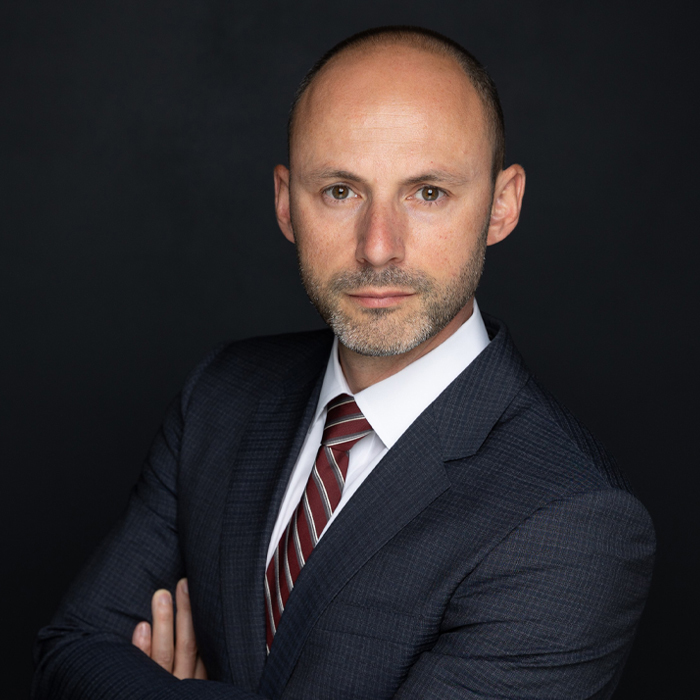
Verified By: Michael Oykhman, Senior Criminal Defence Lawyer
Michael Oykhman is a senior criminal defence lawyer and the founder of Strategic Criminal Defence, a leading firm with offices across Western Canada and Ontario. With nearly 20 years of legal experience, he has appeared at all levels of court in Alberta, including the Supreme Court of Canada, and has successfully defended thousands of clients.
Experience
- Proven Results: Successfully managed over 10,000 criminal cases, experience in complex matters such as impaired driving, domestic violence, and sexual assault.
- Strategic Problem Solver: Trained as a trial lawyer but recognized for his experience in alternative resolution strategies, often securing the best outcomes for clients without a case ever going to trial.
- Multi-Jurisdictional Authority: Licensed to practice law in Alberta, British Columbia, and Saskatchewan.
Education & Academic Leadership
- Education: Holds a Bachelor of Laws (LL.B.) and a B.A. in Psychology from the University of Calgary.
- Academic Distinctions: Recipient of the Crown Association Prize (top grade in criminal law) and was the first-ever finalist for the University of Calgary at the Gale Cup Moot.
- Teaching & Mentorship: Currently serves as the Advising Lawyer for Student Legal Assistance and is a sessional instructor at the University of Calgary Faculty of Law, teaching Advanced Criminal/Constitutional Appellate Advocacy.
Credentials & Recognition
- Top-Rated Advocacy: An 8-time recipient of the Three Best Rated® Top Criminal Defence Lawyer of the Year award in Calgary.
- Professional Memberships: Active member of the Criminal Trial Lawyers Association (CTLA) and the Criminal Defence Lawyers Association (CDLA) of Calgary.
- Connect with Michael: Bio | LinkedIn | Firm Office: (403) 719-6410